Are You Really a Candidate for Dental Implants?
If you have a missing tooth, you’ve probably heard about dental implants. They look natural, feel secure, and can last a lifetime. But many patients in Mountain Home ask the same honest question: Are You Really a Candidate for Dental Implants? Mountain Home residents deserve a straight answer — not a sales pitch. At Dover Family Dentistry, Dr. Matthew Dover believes in giving you the full picture so you can make the right decision for your health.
Dental implants are not right for everyone. Several factors affect whether your body can support them successfully. This article walks through the most important ones honestly and clearly.
What Makes Someone a Good Candidate for Dental Implants in Mountain Home?
The ideal candidate for dental implants is a healthy adult with enough bone in the jaw to anchor the implant post. Your gums must also be free of active disease. If those two conditions are met, you’re off to a great start.
Good candidates also have realistic expectations. Implants require a healing process that takes several months. Patience and commitment to aftercare are just as important as physical health. Dr. Dover evaluates each patient individually to build a personalized treatment plan.
Here are the core traits of a strong implant candidate:
- Sufficient jawbone density to support the titanium post
- Healthy gum tissue with no active periodontal disease
- Non-smoker or willing to quit during healing
- Good overall health with no uncontrolled systemic conditions
- Commitment to regular dental visits and daily oral hygiene
Does Age Affect Your Eligibility for Dental Implants?
Age is one of the most common concerns patients raise. The good news is that older adults are often excellent candidates. There is no upper age limit for dental implants. Patients in their 70s and 80s successfully receive implants every day.
However, younger patients face a different challenge. Implants should not be placed until the jawbone has fully matured. For most people, that means waiting until their late teens or early twenties. Placing an implant too early can disrupt natural jaw growth.
If you are a healthy adult in Mountain Home — regardless of your age — a consultation with Dr. Dover can confirm your eligibility. Age alone is rarely a disqualifying factor.
How Bone Density and Gum Health Impact Candidacy
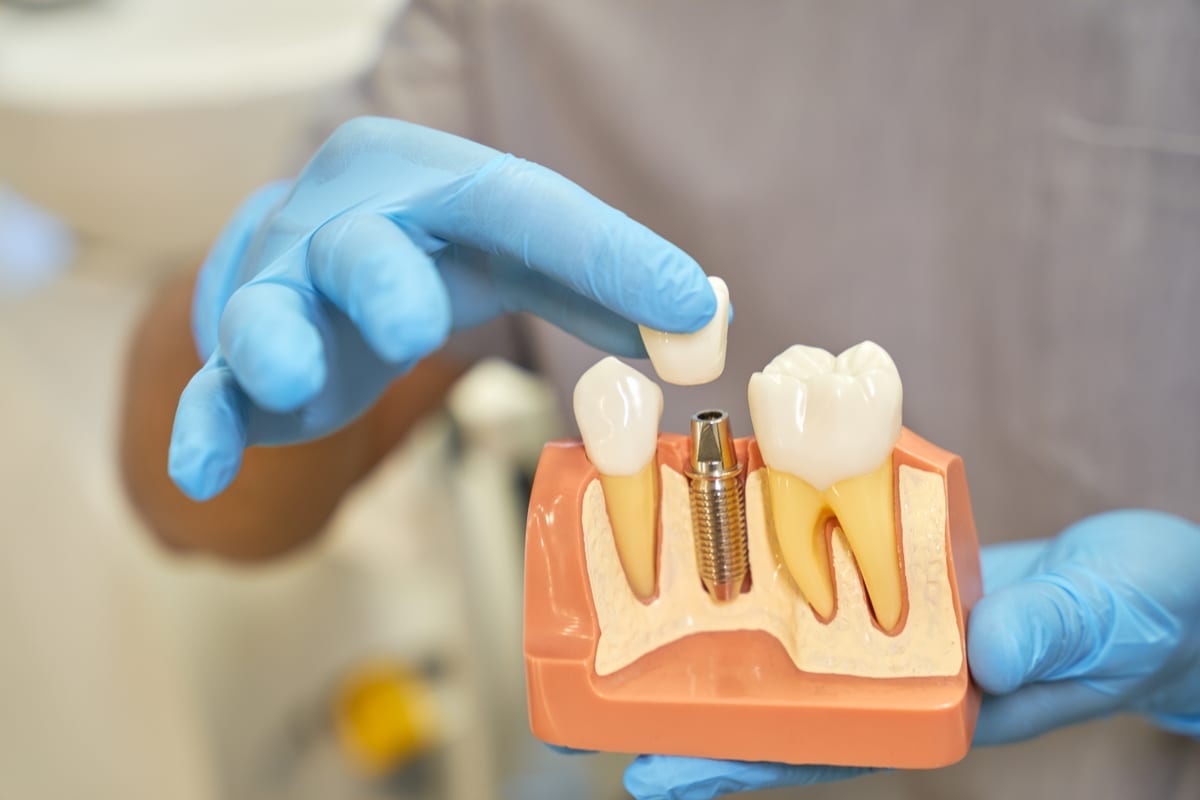
Bone density is the most critical physical factor in implant success. The titanium post must fuse with your jawbone through a process called osseointegration. If your bone is too thin or too soft, that fusion may fail.
Bone loss is common after tooth loss. When a tooth is missing, the bone beneath it begins to shrink. The longer you wait to get an implant, the more bone you may lose. This is why acting sooner rather than later often leads to better outcomes.
The good news is that bone loss doesn’t automatically disqualify you. Many patients undergo a bone grafting procedure first. This builds up the jawbone so it can properly support an implant. Dr. Dover will assess your bone health with X-rays and a thorough exam during your consultation.
Gum health matters just as much. Active gum disease creates an environment where implants are more likely to fail. Treating gum disease before implant placement greatly improves success rates.
Health Conditions That Can Affect Implant Success
Certain health conditions require extra attention before moving forward with implants. None of these automatically rule you out. However, they do require careful evaluation and sometimes medical clearance.
Conditions that may affect candidacy include:
- Uncontrolled diabetes — High blood sugar slows healing and increases infection risk
- Autoimmune disorders — These can interfere with osseointegration
- Osteoporosis — Affects bone density and healing capacity
- Cancer treatment history — Radiation to the jaw can reduce bone vitality
- Blood thinning medications — May need adjustment before surgery
Patients with well-managed diabetes or other controlled conditions often do very well with implants. The key word is controlled. Dr. Dover works closely with your primary care physician when needed to ensure your safety throughout the process.
If you ever experience a sudden dental problem during this evaluation period, Dental Emergency Mountain Home services are available at Dover Family Dentistry to address urgent needs right away.
What About Smoking — Can Smokers Get Dental Implants?
This is one area where we must be completely honest with you. Smoking significantly reduces implant success rates. Tobacco use restricts blood flow to the gums. It also slows healing and increases the risk of infection.
Research shows that smokers have a much higher rate of implant failure compared to non-smokers. This is not a minor risk — it is one of the strongest predictors of implant failure known to dental science.
That doesn’t mean smokers can never get implants. However, Dr. Dover strongly recommends quitting — or at minimum stopping — well before and after your procedure. Patients who commit to quitting give themselves a much better chance at long-term implant success. Your health and your investment deserve that commitment.
What Happens During a Dental Implant Consultation at Dover Family Dentistry?
Your first step is a thorough consultation with Dr. Dover. During this visit, he will take detailed X-rays and a 3D scan of your jaw. He will review your medical history, current medications, and any health conditions that could affect treatment.
Dr. Dover will explain every step of the implant process clearly. If you need a bone graft or gum disease treatment first, he will outline that plan. You will leave the appointment knowing exactly what to expect and when.
Dover Family Dentistry also offers Metlife Dentist Mountain Home services to help Mountain Home patients navigate their dental benefits with ease.
Our team takes time to answer every question you have. No detail is too small. We want you to feel confident and informed before any treatment begins.
Frequently Asked Questions
Can I get dental implants if I have bone loss in my jaw?
Possibly, yes. Many patients with bone loss qualify for implants after a bone grafting procedure. Dr. Dover will evaluate your jawbone with imaging and determine whether grafting is the right first step for you.
Is there an age limit for dental implants?
There is no upper age limit. Older adults often receive implants successfully. Younger patients must wait until their jaw has fully matured, typically in the late teens or early twenties. Dr. Dover can confirm the right timing during a consultation.
How do I know if my gums are healthy enough for implants?
Dr. Dover will examine your gum tissue during your evaluation. If gum disease is present, it must be treated before implant placement. Healthy gums are essential for long-term implant success.
Can I still get implants if I have diabetes?
Patients with well-controlled diabetes can often receive dental implants safely. Uncontrolled blood sugar increases healing risks and infection rates. Your overall diabetes management will be an important part of the evaluation process.
What if I am not a candidate for implants right now?
Dr. Dover will discuss every available alternative with you. Options like dentures or bridges can restore your smile effectively while you work toward implant eligibility. Our goal is always to find the best solution for your unique situation.
If you are wondering whether dental implants are the right choice for your smile, the best next step is a personal consultation. Dr. Matthew Dover and the Dover Family Dentistry team in Mountain Home, AR are here to give you honest, expert guidance every step of the way. Book Now to schedule your appointment with our team.