
Can Teeth Whitening Improve a Yellow Smile Caused by Aging
Aging takes its natural toll on the brilliance of our smile. As time goes on, teeth slowly change in brightness, becoming yellow with aging. But is teeth whitening capable of restoring the lost shine? As we get older, enamel thins and becomes more susceptible to discoloration. Stains from foods, drinks, and lifestyle habits also contribute to yellowing.
This blog examines whether teeth whitening is effective at correcting an aged, yellow smile and how to achieve a whiter, younger-looking smile.
Understanding Teeth Discoloration due to Aging
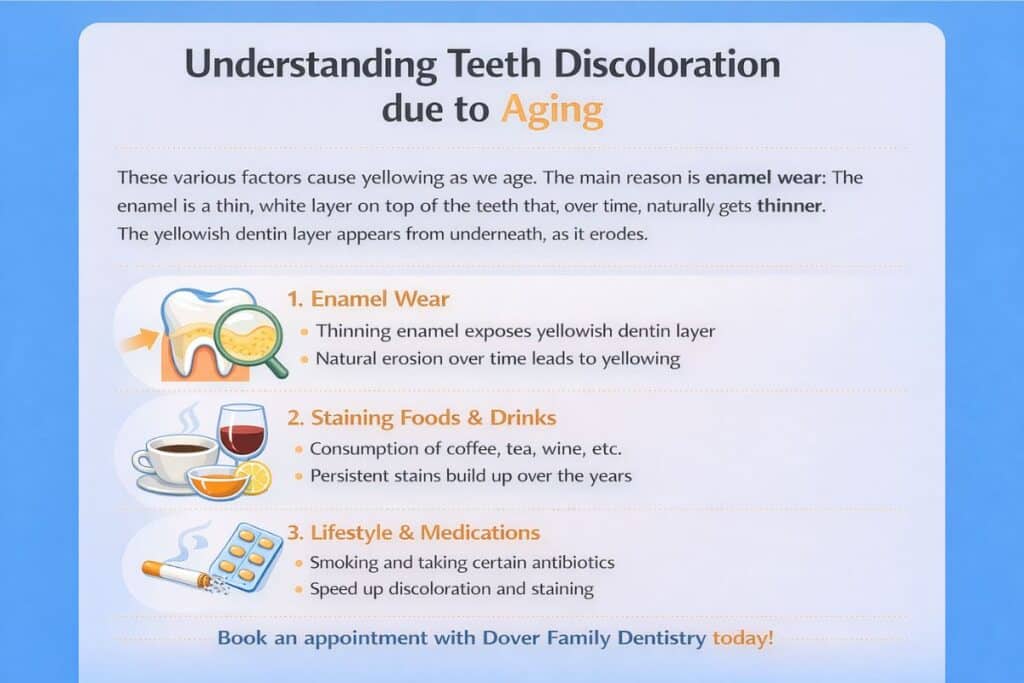
These various factors cause yellowing as we age. The main reason is enamel wear: The enamel is a thin, white layer on top of the teeth that, over time, naturally gets thinner. The yellowish dentin layer appears from underneath, as it erodes.
Staining foods and drinks are another major culprit. Those would include items like coffee, tea, wine, and even some foods, which, over the years, stain teeth and give them this persistent yellow tint.
Additionally, lifestyle choices, medications, and conditions can speed up discoloration. For example, smoking and some antibiotics can make teeth more vulnerable to stains and yellowing.
How Teeth Whitening Works
Teeth whitening in Mountain Home is a popular solution for restoring brightness to yellow teeth. There are two main types of whitening treatments: in-office professional treatments and at-home whitening products.
In-office treatments, done by dental professionals, usually consist of a stronger bleaching agent since the whitening can be achieved right there on the spot. At-home whitening products include strips, gels, and toothpaste. These often contain hydrogen peroxide or carbamide peroxide, which act to break down stains on the enamel. Whitening gels and strips gradually lighten teeth, while the action of whitening toothpaste is to remove superficial stains with abrasives and mild bleaching agents.
Whitening works by breaking down stains and penetrating the enamel to lift discoloration, helping to restore natural whiteness. Professional whitening treatments are much quicker and generally deliver more dramatic results, whereas at-home whitening treatments can still provide noticeable improvement with consistent application.
Can Whitening Effectively Improve a Yellow Smile Caused by Aging?
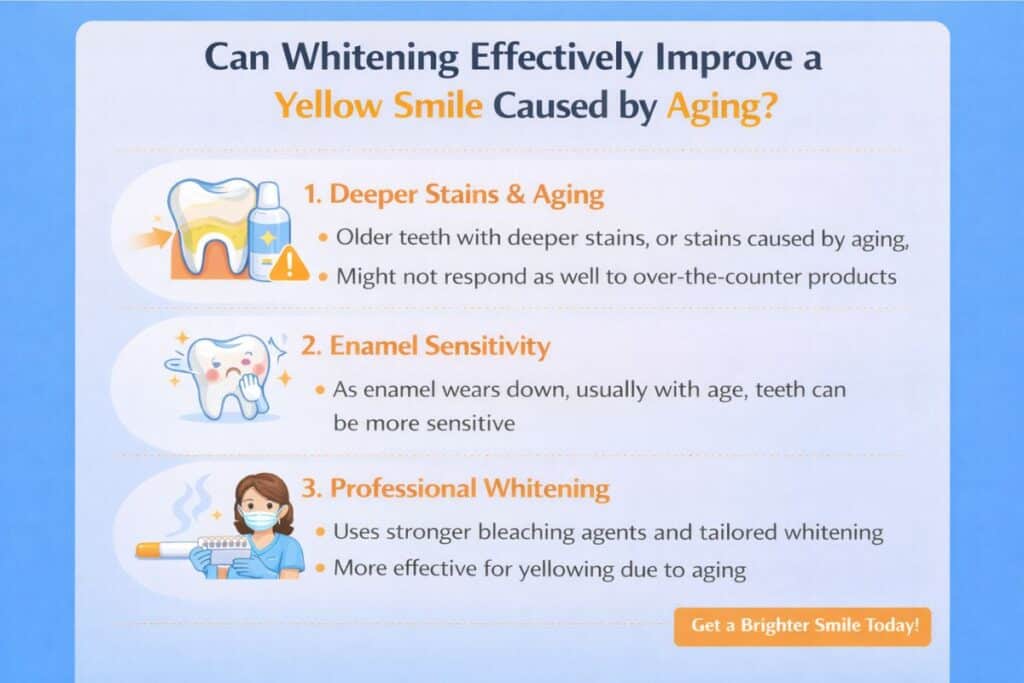
Whitening can indeed work wonders on a yellow smile from aging, but it’s not all the same. In general, people will easily notice improvements with whitening treatments, very often based on surface stains, which are caused mainly by food, beverages, and aging.
However, differences can appear in relation to the seriousness of tooth discoloration. Older teeth with deeper stains, or stains caused by aging, might not respond as well to over-the-counter products.
Another factor that may influence the effectiveness of whitening is enamel sensitivity. As enamel wears down, usually with age, teeth can be more sensitive to whitening products. This can affect both the comfort during the procedure and the eventual result.
In cases of sensitive teeth, it is recommended that one consult a dentist before starting any whitening treatments to ensure the chosen method will be safe and effective.
Professional teeth whitening in Mountain Home will be much more successful with yellowing due to aging, since stronger bleaching agents are used. They also permit the dental professional to adapt the whitening to the individual needs of the patient. On the other hand, at-home whitening options are generally easier on the wallet and more convenient, but often provide subtler results and take longer.
Aging can cause yellowing of the teeth, and whitening may not be able to completely reverse this problem. However, teeth whitening has its limitations and requires choosing appropriate methods. Professional treatments may be the best option in the case of deeper stains or more considerable discoloration.
Consult with Dover Family Dentistry if you’re considering whitening your teeth. This will give you options for the best course of action in gaining the results you desire. A whiter smile is accessible, and with proper care, it can continue to glow for many years.
FAQs
1. What should I do if I experience discomfort after whitening?
If discomfort occurs, use sensitive toothpaste and consult your dentist. They may recommend a desensitizing treatment or adjust the whitening process.
2. Should I avoid certain foods after whitening?
Yes, avoid highly pigmented foods and drinks like coffee, tea, red wine, and berries immediately after whitening.
3. Can smoking affect the results of teeth whitening?
Yes, smoking can cause staining and may reduce the effectiveness of whitening treatments. Regular maintenance is needed.
4. Can teeth whitening be done with braces?
Teeth whitening is generally not recommended during orthodontic treatment as it can lead to uneven whitening around braces.
5. How long do teeth whitening results last?
Results can last from several months to a few years, depending on lifestyle habits and the method used.